TalksEngineering in production25 min
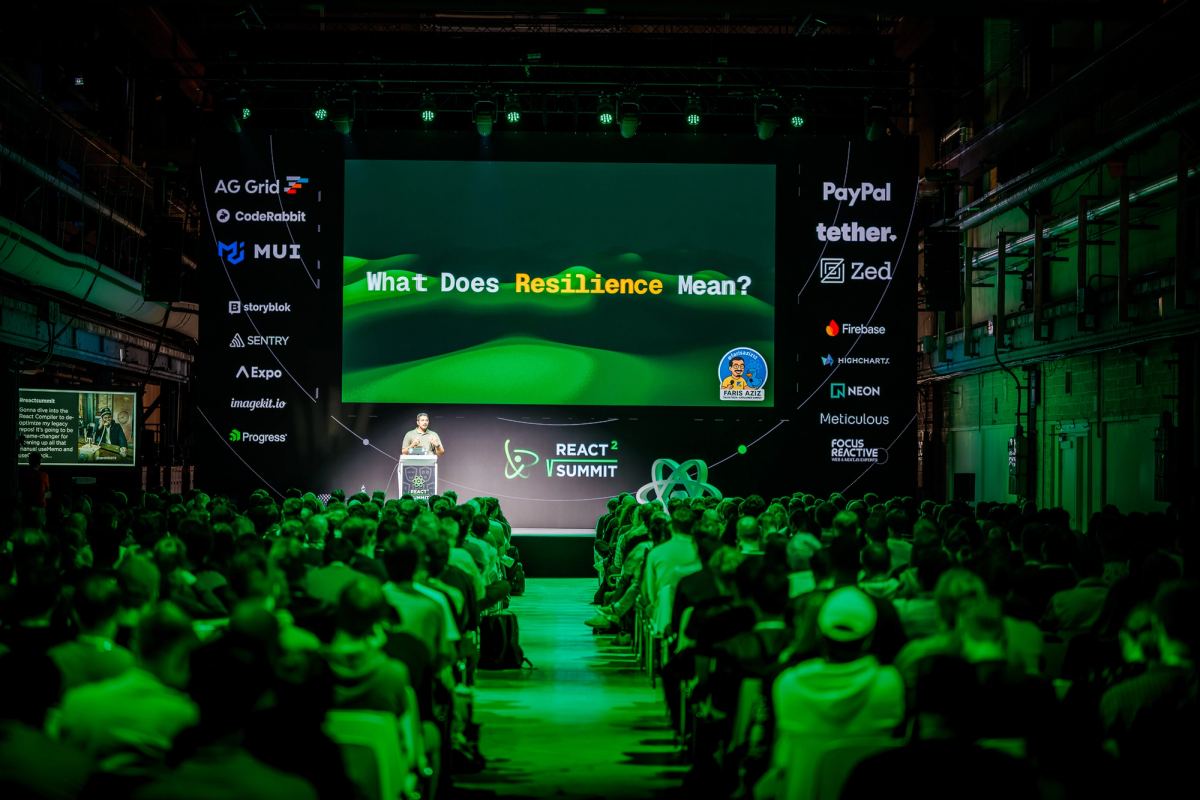
Building Resilient UIs with React
Recording on GitNation · 29 min
The premise
Modern React applications are no longer just UI layers. They sit at the boundary of a distributed system, coordinating APIs, third-party services, feature flags, client-side caches, async rendering, and user-critical flows that can fail in several ways, some loud and others not so much.
This talk looks at resilience from the frontend outward. Not in a “self-healing systems” sense, but in the practical sense of baking better guarantees into the way we design React applications, so they fail more predictably, recover more safely, and surface the right signals when things go wrong.
Using real production lessons from Smallpdf, including a 35-day region-specific payment failure that went undetected while most metrics looked healthy, we’ll examine why frontend resilience is often less about preventing total outages and more about containing partial, conditional, and business-critical failures before they become expensive. We’ll explore how React architecture directly shapes recovery speed, debugging precision, and operational confidence, especially at scale.
Along the way, we’ll cover the frontend as a distributed system boundary, why platform uptime does not equal successful user outcome, how to use component trees, Suspense boundaries, and error boundaries as failure-containment tools, and how feature flags can either improve safety or quietly multiply risk depending on how they are structured.
Who it's for
Frontend engineers working with React in production
You leave with
- Why modern frontends should be treated as distributed system boundaries, not just presentation layers
- The difference between platform uptime and business-success uptime, and why frontend teams need to care about both
- How partial, regional, and conditional failures slip past traditional monitoring
- How to use React component boundaries as failure domains, recovery zones, and debugging surfaces
- How to make error boundaries more useful by turning them into structured observability points
- How frontend architecture influences MTTR, change failure rate, and overall delivery confidence
- Why feature flags can either improve resilience or dramatically increase risk and testing complexity
How this talk evolved
- 2026
Building Resilient UIs with ReactCurrent
Shifts the emphasis from delivery practices and reliability metrics to React as the boundary of a distributed system. It uses a regional payment failure at Smallpdf to explore component trees, Suspense and error boundaries, feature flags, recovery and observability.
- New
Building Software That Heals as Fast as It Breaks
Focuses on delivery practices and systems awareness: atomic changes, trunk-based development, feature flags, rollbacks, SLOs and DORA metrics. The related Building Resilient UIs with React version puts more emphasis on React architecture and containing partial failures.